Happy Easter to all from Old Stone Well Farm! It’s a special day, one where I find hope amid despair, life in the face of death, and remember that God is holding each one of us. I also invite you to join me on Sofie’s Hill on this Resurrection Day for a beautiful sendoff for Rev the cat. (More on the timing of his farewell in the video! Talk about a God moment!) It is a joy to have you with me on this day!!! I would love to hear about your Easter God moments. Email me at accidentalcountrypastor@gmail or watch the video on YouTube and leave a message.
The holiest days leading us to Easter are here and I spend the day making a Swiss German soup known as Seven Greens Soup. Traditionally served on Maundy Thursday, the soup features seven greens, which got me thinking about Jesus’ seven last words spoken to us from the cross. Come and ponder with me these words as well as Jesus’ mandate to love one another. Let us journey toward Easter together — and bring a friend as well!!
What better way to spend Palm Sunday than at the church where I hear God speak the most powerfully to me — nature. It’s on a cold, rainy trail where thoughts of legacies, palms and my redeemer, got me wondering: What do I really need in life? So let’s usher in Holy Week together. Join me. I promise you won’t get wet like I did. I pray our time together will be a blessed time. (Oh, and there was a little surprise during filming. Something that I wonder if Rev, the cat, had something to do with? A little smile from heaven?
Getting ready for Palm Sunday at Old Stone Well Farm and realized just how not ready I am. Ever find yourself in a season where all your best laid plans got changed? Perhaps, when this happens, it is God’s invite to us to really be open to something new. Or perhaps it’s just an invite to stop “doing” and just be. So, won’t you join in this short time together to just “be”?
It’s April’s Fools Day at Old Stone Well Farm and my chickens played a joked on me that involves one of their eggs!
So I invite you this day, to take a few minutes, press play and listen to how after I got done laughing, their joke got me thinking about the season of sadness I’ve been in and the need for self care. And let me know if you have ever had the experience I have had. I’m learning so much about chickens.
(And a reminder, I will be off this Sunday and so no worship video, but please go to YouTube and make your Sunday an Old Stone Well Farm rerun day…or marathon!
Go to YouTube and type in “Donna Frischknecht” in the search and you will see in the library 156 videos! I will be honest, there are some I really should take down. Wow. Old Stone Well Farm has and is always evolving!)
Need a smile? Need encouragement? Need to feel the love and grace in your lives again? Then let’s “run” back to where we will find wholeness again. On this fourth Sunday in Lent we ponder the parable of the Prodigal Son with a little help from Rembrandt, Henri Nouwen — and some cute little piglets! Enjoy your time in Vermont at Old Stone Well Farm. Comment, share…and let me know your answer to what brings a smile to your face.
My favorite season is here. No, not spring, but maple sugar season!
The sap is flowing from the trees and the sweet air from the sap being boiled into syrup is wafting on parts of the trail I run on daily. Maple syrup season makes mud season almost bearable — almost.
So, as we begin our third week in Lent, I invite you to the farm where I think about God, maple syrup, sugar shacks and this thing called “community.”
And a shout out to Rathbun’s Maple House, rathbunsmaple.com, for always serving such a wonderful breakfast! It’s a blessing to live near such an iconic place.
Take a midweek break here at Old Stone Well Farm Vermont as we awaken our senses to God’s beauty all around us. I spent some time practicing centering prayer the other day and discovered things I would have missed if I was not fully present to the divine. Like an interesting critter in a tree and a beautiful tiny feather on my path. Can you spare a minute or two to center your prayers on God and God alone? Imagine what you will see.
The second week in Lent begins at Old Stone Well Farm and I find comfort on a cold, snowy day wrapped in a prayer shawl and thinking about chicks, mother hens and how comforting it is to think of God as a protective hen that I can run to when feeling down or lost. Who do you turn to when feeling down or lost? And I am curious, what’s your favorite image of God? Come, join me at the farm. Like, comment, share! Blessings!
For my thoughts are not your thoughts, nor are your ways my ways, says the Lord. For as the heavens are higher than the earth, so are my ways higher than your ways and my thoughts than your thoughts. — Isaiah 55:8–9
Jesus tells us in Matthew 25 that when we feed the hungry, we are indeed feeding him. Yet, how do we define “feed”? Is feeding a free church meal? Is it a food pantry in the church basement? Is feeding one of those micro pantries set up on the church property that allows 24/7 access for those who are hungry?
At the heart of all these questions is the most important one: How do we get to the point where free meals, food pantries and micro pantries are obsolete? How do we eradicate hunger? Perhaps we begin by looking at the systems in place that keep folks hungry. What if national grocery chains didn’t pick locations for stores based on profitability, but real need? For example, many rural areas are labeled as food deserts — places where healthy, affordable food cannot be found. What if lobbyists didn’t advocate for corporations that perpetuated food waste? What if, after cleaning up a free church dinner, the faithful sat down and asked, “Is there more that can be done?”
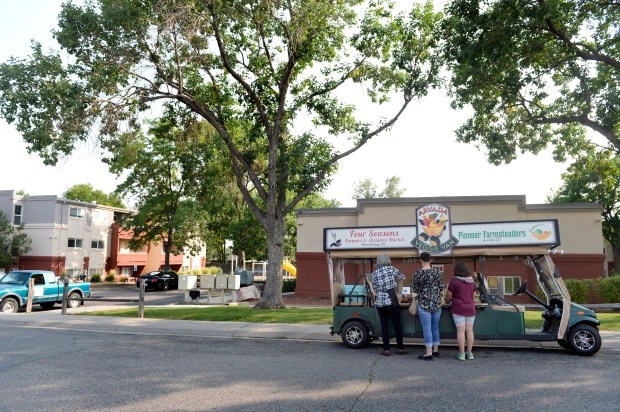
A young college graduate asked just that when returning to his rural community. After noticing perfectly fine vegetables and fruits left in the fields, he asked for permission from the farmers to glean the fields and take what was collected to area food pantries. When we began noticing those who really needed the fresh produce were not showing up — the elderly who could no longer drive to the pantry — he asked, “What more can be done?” He secured a generous grant to buy a van and began driving into the area food deserts. His veggie van became a healthy version of an ice cream truck. And while no ditty or catchy tune played announcing its arrival, the van nevertheless put a smile on the faces of those it would bless. One young man was eradicating hunger, and it all began by asking, “Is there more that can be done?”
Pray
Creative God, your ways are so much better than what we can ever imagine. As we seek to live the vision of Matthew 25, help us to let go of all our preconceived ideas of what serving you entails. Open us up to new ideas. In Jesus’ name, we pray. Amen.
Ponder
In what creative ways is God asking us to feed the hungry? As Isaiah notes, our ways are not God’s ways. This day, think beyond the ways the hungry are traditionally fed. Is there a veggie van in your future? Or is there a gleaning ministry waiting to be born?

 accidental country pastor