This Way of Life: A Little White Church Lenten Journey

Day 8 and 9:  A Wind-Tunneled Walk 

It was a blustery morning where you could tell Old Man Winter was trying hard to hold on to his reign of cold and not give into spring’s warm days. The wind blew so sharply it felt as if little knives were cutting through my coat. It was then I remembered just how the avenues of Manhattan became wind tunnels this time of year. images

Back up at my little red house in Vermont, wind just blew, whipping through the valley with nothing to stop it. There weren’t any looming skyscrapers tunneling the wind as it was now being tunneled.

I burrowed by mitten-less hands deeper into my coat pockets. Why I thought it was going to be warmer in the city when I packed for the ministry seminar I was attending, I have no idea.

Clearly I wasn’t dressed for the elements, but I resolved to set forth on what was going to be a brutal walk ahead for I had someone important to meet here on the streets of Manhattan.

I had to meet me.

I had to meet up with the “who” I once was. More importantly, though, I had to remember who I was as God’s beloved and remember a divine guidance that never failed me.

My father always told me that sometimes in life we needed to take a step back in order to move forward. I had taken those steps back at times, but now it was time to look back—and remember. Thus, my walk began.

My first stop was to the building that gave me my entry into the magazine business. I stood on the corner looking at the impressive art deco skyscraper and remembered how many years ago I stood in the exact same place feeling awe that this was where God was leading me for an internship.

It was just days before Christmas and I couldn’t help but feel God was giving me one of the most incredible present—the start to my dream career.

After my interview I made my way to the bus terminal to head across the river back to New Jersey where I was I still living with my folks. When I walked through the door more than a warm dinner greeted me. I was also greeted with the news that the magazine had called back already. I had the job!

I could see then the beginning of a journey that wasn’t just about “career” but more about a journey of trusting God’s leading. You see prior to that first magazine interview as a college student, I sat in the cafeteria of the fashion school I was attending, reading the little Bible the Gideon group was handing out on the street corner earlier that fall. Specifically I read from Jeremiah, “for I know the plans I have for you…”

My eyes began to tear. Not from the biting wind, but from the joy that began warming me up as I stood remembering God’s provision and love.

I then walked over to Time Square and gazed at the next building where my editorial career really took off and where I would be for the next decade (of course, not in the same building as the magazine moved three more times due to being acquired by various other publishing companies).

I remembered how excited I was that early summer day as I took the escalator up to the mezzanine where then elevators would take me the rest of the way.

I was a bit early that morning and so I lingered in the lobby taking time to soak in the sights and sounds all around me and thought about what the future would reveal—all the glamorous parties, photo shoots and travels that were part of the associate fashion editor’s job duties.

I then remembered the words of a photographer colleague of mine who would accompany me on assignments at my previous job.

“Remember who you are. Don’t let this industry turn you into something you are not. Stay true to yourself.”

Hesitantly, I entered into the lobby again and I lingered a bit, soaking in the sights and sounds around me. I found my heart thanking God not just for the opportunities given to me, but for those He brought into my life with words of wisdom, like the wonderful words I held onto for all my time living and working in New York City, “Remember who you are.”

For me those words weren’t about remembering who “Donna” was. They were deeper for they echoed God’s words to the Israelites, reminding them in their journey that God was their God and they were His people. God was my God on my journey and I was His child.

I soon noticed the time and realized I had to hurry to get to the seminar I came to the city for. I made my way like I had always done before, walking in the direction of whatever traffic light told me that I could walk, thus, having to avoid standing still on any street corner.

As I snaked through the streets, I thought about how many times I was impatient with God’s red lights in my life. How many moments of growth and awesome God moments did I miss all because I was too impatient with the divine red light and opted to move forward with the light that told me to go now even though that “now” was not the right time or the right path?

While pondering this, I soon realized that my hurried steps were in sync with everyone else’s but, unlike my eyes, their eyes were avoiding any contact with others. I also noticed something that brought a huge smile to my face. Not only did my steps line up with those around me, but my black flats, black tights, black skirt, black coat, accented with one amazing accessory mind you—my Kate Spade bag—were in sync with all the young fashionistas scurrying to their offices.

With all the changes I noticed in myself and in the place that was once my home, it was good to know that some things (even if it was just the NYC fashion dress code) never changed!

I finally got to class and began thawing my frozen fingers with a steaming cup of coffee. Despite my physical discomfort, my wind-tunneled walk was worth it. I was glad I got to meet up with my former self and to remember how God has led me from city streets to rural fields, up escalators and elevators to the best steps ever taken—up the old wooden steps to the doors of a little white church.

Shortly after taking my seat, the instructor walked to the front of the room. I opened my notebook and took out my pen. Class was about to begin. The instructor spoke:

Today we are going to spend time exploring something important that we must not forget ever in ministry—in life. That is, our need to remember who we are as God’s beloved.

I put my pen down and sipped my coffee. No need to take notes. I’ve already aced this lesson. For on wind-tunneled New York City streets I met up with someone special. I met me—the who I was, the who I am and remembered the who I will always be. God’s beloved beautifully led now and always.

This Way of Life Lenten Challenge: Talk a walk down memory lane and meet up with someone very important. You. God’s beloved. And reflect on all the beautiful ways God has led you.

This Way of Life: A Little White Church Lent

Join Pastor Donna as she reflects on the transforming power of Lent and takes you on a 40-day journey of discovering God’s message of hope and renewal that she discovered in a little white church and in the hearts of the people who called that church “home.”

Day 5—Retreating

It’s the first Sunday in Lent and I find myself just wanting to curl up on the sofa with a good book or some knitting or quilting. I want to curl up and try to chase away thoughts of Sunday morning worship—those unrelenting thoughts of what worked and what didn’t work that keep playing over and over in my head.

Did I really say that when I was really trying to say this? Or why didn’t I go out of my way to say hello to that person who I saw heading out the door because something tugged at my heart to reach out to them? And why did I forget to lift this person during our prayer time?

I try to get all that happened during the worship hour out of my head because what happened or didn’t happen doesn’t really matter. What matters is how present I was to God who called me and how faithful I was in my witness to His love. That is what matters.

But the world has programmed us from an early age to believe that our worth is found in how well we perform, how educated, how pretty, how talented, how…the list goes on and on with all the “how’s” that are imposed—or self imposed—on us. We buy into that “grading” system to the point where we often become our own worst enemies and critique ourselves so harshly we forget we were wonderfully and beautifully made in God’s image.

This just doesn’t happen to pastors. It happens to us all for we all have that never-ending tape playing in our heads about things we could have done better.

And so the sofa cries out to me on this first Sunday in Lent for it is offering me a place to retreat from the world and, more so, a place to retreat from the expectations I place on myself. I just want to withdraw and stop the tape from playing in my head. I look at the book sitting on the coffee table for months, but I have no interest in opening it up to read. I pick up the material for my quilt, but I have no desire to stitch the block at this time. I look at over at the knitting needles sitting in the basket of yarn on the old dry sink. I don’t even bother to pick them up for all I know how to do is knit inconsistent, cock-eyed rows.

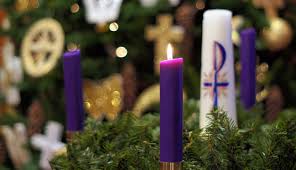
I sit on the sofa. It’s the first Sunday in Lent and I just want to curl up and retreat from the world and from myself. And so I decide to do nothing but sit and allow myself to feel God’s arms around me, hugging me back into a place of worthiness. I light a candle and I sit quietly watching the flame flicker.

It’s a Sunday afternoon in Lent and I know I need to retreat when I begin to think my success as a pastor, as a person, as a wife, as a friends, is all based on things I can do, learn and improve upon. I know I need to run into the arms of God for it is only God working through me will I find the sense of worth and accomplishment I seek.

This Way of Life Lenten Challenge: Spend Sunday afternoons in Lent on the sofa—or a favorite chair—or any place that you can find some rest—and allow yourself to retreat from the world and from yourself so that you can draw closer to God discover the beauty of true worth is found only in God.


Thoughts at the Old Slate Farm Sink

IMG_0087

My beloved cows. Well, not mine. They belong to my neighbor, my husband and I simply allow them to graze on our property. It saves me from mowing more land!


WRITER’S NOTE:  This entry is a “Throwback Thursday” one. It was written a year ago but never published on Accidental Country Pastor. And so I wanted to share. 

I am not sure why, but tonight as I stood in front of the old slate farm sink washing the dinner (and lunch and breakfast) dishes in my little Vermont home, I felt a twinge of sadness, the kind of sadness that comes with good byes. It was strange because the calendar tells me it is still early in the summer and so this twinge couldn’t be the back-to-school blues I get even though I am way beyond those back-to-school years.

The twinge was sharp. What was this about?

As my hands instinctively plunged into the warm sudsy water fishing for the next utensil to scrub, my eyes gazed out the window watching the neighbor’s cows graze on our hilly pasture. A slight wind blew the tall grass and the limbs of the apple tree hanging over the marshy part of the yard swayed.

The cows only looked up for a second to see what the rustling was about before becoming disinterested and returning to munching on their dinner, which featured an appetizing array of clover and wild strawberries that mysteriously appeared on our property this year. (Those birds have a way of planting little surprises, don’t they?)

That’s when I wondered. Did they ever feel such a twinge? Were they ever aware of something larger at work in their lives? Did they ever give the winds of change more than just a disinterested passing glance?

Perhaps I am guilty of paying too much attention to the winds blowing in my life that often bring on these twinges of sadness. I have been told that I “feel” too much, but after more than four decades of living this way and sharing it through my writing, I wouldn’t trade my oversensitivity for anything. I remember a seventh grade report I did on the Noble Prize winning novelist and poet William Faulkner who said, “the human heart in conflict with itself can make good writing because only that is worth writing about.”

So I have learned to embrace the twinges I get. I embrace them and I see them as God’s gifts to me. Gifts that open me to seeing beyond what currently is, to the what might be, that always leads to the what is to come.

The cows munched, my eyes gazed and my hands kept washing the dishes.

Earlier that day I had a visit with a dear friend whom I haven’t seen in more than year. It was wonderful catching up with her. As we sat on her patio of her lakefront home, I had that familiar twinge of sadness. I guess I was already thinking about the good bye that was to come and wondered when I might see her again. I guess I was thinking about the last time I sat with her, as I got ready to move away just a year ago. I guess I got to thinking about the last time I sat in the double Adirondack chair and enjoyed the view of the lake with her husband, whose health was declining, by my side. I remembered the wind blowing then and how I just wanted it to stop. No more changes. Stop for just even a second.

I looked over at that chair now empty. The wind blew off of the lake and the roses she planted a few years ago, which have matured beautifully, began to dance as if filled with joy. So why then the sad twinge I felt?

As I drove the serpentine country road home, I passed a farmhouse that I have passed hundreds of times. I always took notice of it because in the yard there were these huge wooden letters that would spell out words. In all the years I have driven past that house, the words have typically been three that took turns appearing: “peace,” “joy,” and “rejoice.” This time, though, there was new word.

TRUST.

I had to slow down and do double take. Trust? I have never seen that spelled out before on the property. Trust. It was as if God put that sign there just for me, especially since the last “t” in the word was a cross.

Trus+…

Trust the twinges of sadness. Trust the now empty chairs. Trust the letting go. Trust the growing older. Trust the children turning into adults before your eyes.

Trust the winds blowing.

Trust…the unknown tomorrow for God will lovingly and gently reveal it. For it is God and only God who holds my comings and goings, my plans to my life, in His loving and very capable hands.

The dishes were done. The warm sudsy water had turned cold and sudless. And the cows? They began their march back home.

I watched the slow, solemn procession. Their tales waved as if waving good-bye to me. I leaned over the sink towards them as if that would keep them from leaving me. Over the hill and beyond they went until the last little calf was out of sight.

“Trust,” I heard myself whisper softy out loud.

The cows will be back…

Tomorrow. Just trust.

Day 21—A Circle of Light

A Little White Church Christmas

As we approach Christmas Eve, hear the stories of God incarnate working in and among the people of the little white church nestled in a village in Upstate New York. These stories of “Emmanuel”—God with us—were gathered during Donna Frischknecht’s time serving as minister of a historic white clapboard church right on the border of Vermont, from 2007-2013.

December 21

I spoke the last word of my Christmas Eve sermon and as I did I secretly breathed a sigh of relief. No matter how long one has been at his or her craft—Christmas Eve worship always brings a bit of anxiety.There’s the anxiety of trying to tell the old familiar story in a fresh, new way. images

(Reminder to self: just let God’s Word speak, don’t get cute or fancy. Just be real.)

Then there is the anxiety of what if this would the night in which for the first time ever I blank out up there and forget everything. That’s an anxiety leftover from seminary days.

(Reminder to self: it has yet to happen and so it probably will never happen.)

Then there’s the anxiety of new faces staring back at you from the pews, many of whom probably have no interest in what the church offers beyond Christmas Eve. I have come to realize those who find themselves gathered in a church on that holy night are often gathered out of a sense of tradition, which is not bad at all.

(Reminder to self: the Holy Spirit can work—and does reach hearts—with those simply seeking tradition.)

My task is not to convert people on Christmas Eve. My task is to be as faithful as I can in the telling God’s story of salvation and let my own knowledge of that salvation and grace, speak through me.

Still I have a healthy awareness as to where the Christmas Eve sermon ranks in importance for those gathered to worship.

(Note to self: keep Christmas Eve sermon on the shorter side.)

I would say the sermon is probably at No. 3, right behind wanting to hear the old familiar songs of Christmases past sung once again.

What’s the No. 1 reason many come to church on Christmas Eve?

They come for that incredibly moving moment when the lights go out in the sanctuary. Then, with only the radiant beams shining from hundreds of individual candles, “Silent Night” is softly sung by young and old, believer and doubter, broken and whole, joyful and sorrowful, sinner and saint.

And nowhere more was this beloved tradition so beautifully executed than at the little white church.

It was there that I, a new pastor, was introduced to a new tradition I had never experienced before.

As I was planning my first Christmas Eve, I was told by the faithful and hardworking Worship Committee that while I basically had free reign to do whatever new thing I wanted to do that night, I was not to change how they did the candles during “Silent Night.”

“First we have communion,” said one woman in a way that told me she was used to being in charge. “We have two chalices, one for grape juice and one for wine.”

“We have to remember to put a red bow on the wine chalice so that people know which cup has the alcohol and which one doesn’t,” another committee member chimed in.

(Note to self: remember to announce that on Christmas Eve as well as print the red-bow chalice information in the worship bulletin.)

“Okay,” I said, agreeing with everything so far.

“And then we light our candles from the Christ candle and we begin making a circle all around the sanctuary,” the woman with the drill sergeant voice continued.

(Note to you the reader: This woman with the gruff voice turned out to be one of the most blessed angels in my ministry while at the little white church. I always smile whenever I think of her.)

“You don’t go back to your pews?” I asked, trying to envision the circle being made as folks come up for communion, while others took their lighted candles up the aisles of a church made out of timber some 200-plus years old. I was fond of that church and really didn’t want to see any fires on Christmas Eve.

“Yes,” she said in a way that told me I shouldn’t have questioned it.

“We’ve always done it this way, pastor,” yet another committee member added.

“But what about safety issues?” I asked ever so gently.

“You just have be careful with your candle,” was the reply.

“What about those who have trouble walking and have to remain seated in the pew? We can’t leave them out of the candle lighting?” I asked, thinking of my handicapped brother who would visiting that Christmas Eve and who definitely would be that person forgotten in this beautiful, beloved tradition.

“No problem. Whoever has to remain seated, will stay seated. An elder will light their candle and stay with them as sort of an extension of the circle,” was the reply back.

“Oh, okay. That’s a wonderful solution,” I said, still not certain as to how this was all going to play out on Christmas Eve.

And so I spoke the last word of my Christmas Eve sermon and as I did I secretly breathed a sigh of relief. That part was done. Now, though, there was the angst of the singing of “Silent Night” and the circle of light that would be made in the sanctuary.

Now more than ever I had to trust God.

(Note to self: I am just an instrument. Let God work on this holy night.)

And work He did.

Young and old, believer and doubter, broken and whole, joyful and sorrowful, sinner and saint, all came up to break the bread, then dip in either of the two chalices (the one with the red bow was quite popular), and then light their candle.

Back up the side aisles they began to go. I really couldn’t pay much attention to the formation of the circle, as I was busy administering the sacrament. By the time all were served the bread and the cup, it was time for me to light my candle and say a prayer before the singing of “Silent Night” began.

I looked up and out at the sanctuary for the first time. I couldn’t speak. My throat choked up with emotion and I had to fight the tears.

Before my eyes was an unbroken circle of pure light, with faces all beaming, especially the faces from those on the Worship Committee, who looked at me as if to say, “Isn’t this beautiful? See, you had nothing to worry about, pastor.”

All come for this Christmas Eve moment in which something more powerful than tradition happens—the light of Christ, if only throughout the four or five stanzas of “Silent Night”, is seen by eyes often blind to it.

The smile from a teen as God whispers blessed assurances that life will get better.

The tear coming from the elderly woman as God’s arms wrap around her when her husband’s arms can no longer hug her.

The child, who is fighting his mom to hold his own candle, is finally given the light. He quiets down and holds the light with reverence and awe, as God’s Spirit lights up the world before him.

My brother, seated in the pew, but not alone. The light of Christ shining forth on him in the way of the candle of a church member who chose to stand by him.

Each person, even if it is just for the four or five stanzas in which “Silent Night” is sung, can see the Christ light in their lives.

The little white church’s beloved tradition had become mine. And every year I couldn’t wait to see the circle of light in that historic sanctuary, a reminder of God’s never-ending love upon Christ’s church and its people.


Day 16—God Knows the Plan

A Little White Church Advent

Come on an Advent journey and walk the rural roads and snow covered paths with Donna Frischknecht as she shares stories of God’s promises being fulfilled in the most amazing ways. These stories of “Emmanuel”—God with us—were gathered during her time serving as minister in a historic white clapboard church in upstate New York, right on the border of Vermont, from 2007-2013.

December 16

Her life seemed to be one struggle after another, with never a moment to catch her breath and process all that was going on. Nagging health issues and mounting bills added to the stress of this newly single mom.

She had the faith of the most battle ready prayer warrior, but even such a warrior stands in the need of intercessions to God from time to time. She was now standing before me, in desperate need of prayer.

I had just come back from a pastoral visit that not only had me physically drained, but emotionally drained as well as I realized one of the saints of the little white church was soon to get his crown of gold. It’s hard being a pastor who falls in love with one’s church for love always comes with heartache.

With the recent visit on my mind I opened the door to the chapel that served as the main gathering hall for all our functions from chicken and biscuit dinners to vacation bible school to Bible studies to just simply hanging out sharing our stories of faith over one of my infamously high octane cups of coffee. Seriously, we’re talking strong coffee to the point I didn’t take offense when the dear souls who accepted a cup from me would go to the kitchen faucet and add a bit of tap water to temper it a bit.

While I was surprised to see her standing there, her eyes told me she was relieved and grateful to see me.

“Pastor Donna,” was all she could get out before sobbing. I had no idea what had happened, but managed to get bits and pieces from her in between the sobs. She had been very close to her breaking point but now the season of “be of good cheer” made her finally break.

“I can’t do it anymore. I just don’t understand why God is not showing me the way. Why, Pastor Donna, why isn’t God answering me?” she yelled with painful defeat in her voice.

Did I mention loving those in your church always breaks your heart? Well, my heart broke for this mother and I never felt so useless as in that moment when I stood there with her in the chapel not knowing how to answer her because from where I stood I had to agree with her. God just didn’t seem to be giving any answers.

I am not sure how it happened, but in an instant I took her hand and told her to come with me into the sanctuary for some time of prayer.

In retrospect, I like give credit to the Holy Spirit nudging me to do this because the Spirit just couldn’t stand watching me be useless any longer. So into the sanctuary we went.

The large room with its 18th century wooden pews that still had its period correct doors on each pew was frigid to the point you could see your breath crystalize in the air. The sanctuary was very expensive to heat in the winter and so the thermostat was kept on the lowest setting—basically “off.”

While it was extremely cold, we both went to the front of the church, by passing the pews, and opting for the simplicity of falling on our knees before God.

Once there, tears fell, sobs came and petitions were lifted to the highest of heaven. I prayed and cried for her heartache. She prayed and cried in return. Back and forth and back again, prayers were being said, when finally our two voices melded together into one prayer that was lifted to God.

I am not sure how long we stayed there on our knees praying but my toes were quite numb from the cold as were my fingers. Still, in spite of the cold, after we were done praying we continued to sit on the floor in a silence that made you realize there was something holy in the moment.

“God is answering you,” I finally whispered.

She simply nodded her head in agreement.

“You know, I have always held on to what God said to Jeremiah about knowing the plans He had for him. Plans for a future full of hope,” I said.

She simply nodded her head in agreement again.

“Did I ever tell you my Jeremiah moment?”

She shook her no.

“During seminary I hit rock bottom, just so frustrated with what seemed to be God giving me the cold shoulder.”

She turned to face me, clearly interested in what I had to say.

“Well, I had no idea how I was going to pay for seminary or keep on top of my mortgage payment. As if that wasn’t enough I was alone, no significant other, except my cat…” (I got her to laugh at that.)

“And,” I added, “I had no idea where I was going to wind up after I graduated seminary.”

I continued with my story telling her about how God wasn’t sharing one part of His plan for me. Or so it seemed. Then came the gift of a little white church. No, not the church she and I were sitting in the sanctuary of.

This white church was a Christmas present from my brother. It was my freshman year in seminary and my brother presented me a large box that had me a bit perplexed. I couldn’t even imagine what it was? Definitely not the standard gift card I had come to expect.

I ripped open the wrapping paper swirled with candy canes and snowmen and pushed aside the tissue paper to find inside a wooden New England style little white church. It was the most beautiful thing I had seen. My ooh’s and ah’s, though, didn’t relay what I was feeling in my heart. For as soon as I saw the little white church, I all of a sudden had this certainty that I was going to be okay. God was leading me even though I had no idea where I was going.

“That’s when I came across the Jeremiah passage about God knowing the plans He had for us, plans for a future full of hope,” I said, explaining how for the next three years of seminary I would mediate on that scripture daily while smiling and staring at the little white church that now sat on a drop leaf table in my living room.

Before I could continue on making the point that God had a plan of great hope for her future as well, she smiled and said, “And now you have your real little white church. Now you have us.”

For I know the plans I have for you.

Christmas is a time of year that can bring many of us to our breaking points. But it also a time of year to remember the silences of God are not what they seem for God is never silent.

God is always at work preparing for us a future full of hope. Sometimes that reminder comes in an impromptu prayer meeting on bended knees in a very frigid sanctuary. And sometimes that reminder comes in the way of a little wooden white church that filled me with unwarranted hope some three years before the actual little white church came into my life and filled me with hope realized.

Postscript

 A few months ago I received a letter from this woman telling me I was right about that Jeremiah passage. Her future, she is now seeing, is indeed God led and one full of hope. She also let me know that when she finally made the decision to join the little white church, when asked to share a scripture that reflected her faith journey, she shared with her faith family the one I shared with her years before:

For I know the plans I have for you,” declares the LORD, “plans to prosper you and not to harm you, plans to give you a future filled with hope. Jeremiah 29:11

“I thought you would want to know that, Pastor Donna. Thank you,” she wrote.

I am glad to know.

IMG_1740

My little white church given to me by my brother as a Christmas present three years before receiving God’s Christmas present—a real little white church to serve in rural upstate New York. 


Day 11—The Prayer Tree

A Little White Church Advent

Come on an Advent journey and walk the rural roads and snow covered paths with Donna Frischknecht as she shares stories of God’s promises being fulfilled in the most amazing ways. These stories of “Emmanuel”—God with us—were gathered during her time serving as minister in a historic white clapboard church in upstate New York, right on the border of Vermont, from 2007-2013.

December 11

A silence fell upon the room. A request was made that no one really wanted to step up to and see through. A woman at my table waved to the waitress to order another glass of wine. A good diversion on her part, I thought, pondering whether I, as pastor, could order a glass of merlot with her. Hmm…better stick to my diet Coke. Others around me glanced down at the meeting agenda before them feigning interest in what was to be discussed next.

It was the first Wednesday of the month Chamber of Commerce meeting held in the village tavern, where one could get a really juicy mushroom and Swiss cheese burger with a side of some of the best onion rings I have ever tasted. Perhaps the promise of hamburgers and onion rings was the reason I became active in the Chamber of Commerce, as it was a great way of killing two birds with one stone. I was fulfilling the “being part of the community” part of being a pastor while satisfying my love for greasy pub food.

The room was still silent and for a second I found it amusing how the local business owners gathered for the meeting tried not to make eye contact with the Chamber president. The question he asked lingered like a low hanging cloud.

Who will take responsibility for decorating the gazebo on Main Street? Any takers? Any one?

More glasses of wine were ordered and eyes continued to divert eye contact with the one asking the question.

Before I knew it, my hand went up and I could hear my voice saying something my head really didn’t have time to think through carefully, “The little white church would love to decorate the gazebo.”

Smiles from the Chamber president came and sighs of relief were let out from others.

Did I really just volunteer the church to decorate the village gazebo?

We were already very busy with Advent Bible studies, after school programs for kids, a Christmas cookie sale, packing shoeboxes of toys for a mission project, a caroling dinner scheduled and, for the first time in the little white church’s history, two Christmas Eve services were being planned along with a new Christmas Day service. Of course, there were the Christmas Eve luminaries to also coordinate and put together. Now who was in charge of getting the kitty litter to fill the paper bags?

What in heaven’s name did I do?

God’s answer was to come.

For while having one more thing on the church calendar was not ideal, it turned out decorating the village gazebo was a blessing for both the church and the community it served, as it got us out of the confines of the sanctuary and into the heart of where people were—on Main Street, going about their day, making a trip to the bank, the hardware store, the wonderful little café with the best homemade chocolates and the consignment shop, etc.

In the midst of daily life in the village, the folks from the little white church were doing more than just stringing lights on a gazebo. They were shining their lights out to the community, showing they cared just as much as to what was happening on Main Street as what was happening within the four-walls of the church.

As we strung greenery and lights around the gazebo, villagers would stop to say hello and chat and, as I precariously balanced on a ladder to hang a red bow high up on one of the lampposts, I noticed something.

I noticed the beautiful steeple of the white church peeking over at me and realized how much of a beacon of hope the church has been for centuries to those who called this village home. It was then I knew we had to do more than just hang greenery and lights around the gazebo. And so with a fir tree stuck in a pot at the entrance of the gazebo in which the town dropped off earlier that morning, I came up with an idea. Or more like it, God’s Spirit spoke to my heart as to what to do.

The little white church would decorate the village tree with prayers, many prayers and blessings for neighbors and friends who loved their village dearly.  808_10151275465554650_1226466341_n

So one night we gathered the youth and the children of the church and with permanent markers in a variety of colors and weather resistant foam sheets, Christmas ornaments were created in the shapes of stars and crosses and hearts. Written upon them were our prayers for all in the village. When we were done, we put on our coats and made our way just up the street to the gazebo where we finished decorating.

Yes, the little white would love to decorate the gazebo, I volunteered, not knowing what I was getting our church into. But God knew exactly what we were to do.

We decorated the public tree with the promises of God for all to read and for all to remember that God had not forgotten the once thriving village that now struggled as so many little communities now struggle all throughout our country. God had not forgotten those who called the village home, sweet, home.

A few days before Christmas I was having the desire to have my mushroom and Swiss cheese burger complete with the best onion rings I have ever tasted. I just couldn’t wait till the January Chamber of Commerce meeting.

As I walked from the church to the tavern to pick up my order, I passed the gazebo and the prayer tree. There standing in front of the tree was an elderly lady with a little child. She was leaning down gently speaking to the child who I could hear, as I came closer, was asking about what the ornaments said. Each ornament the child pointed to, the woman read the prayer out loud.

It is an image I will forever hold in my heart for it was a moment when I experienced Christ’s church becoming once again a vibrant and vital witness out into the public, where our witness to God should be.

The woman noticed me staring at the beautiful scene she unknowingly gifted me with and she smiled and said, “This tree is such a blessing. God is indeed with us. God is good.”

I smiled in agreement and went on my way. I had a mushroom and Swiss cheese burger with the best onion rings I have ever tasted waiting for me at the tavern.

God is good. All the time.

Day 8—Who’s Lighting the Advent Wreath?

A Little White Church Advent

Come on an Advent journey and walk the rural roads and snow covered paths with Donna Frischknecht as she shares stories of God’s promises being fulfilled in the most amazing ways. These stories of “Emmanuel”—God with us—were gathered during her time serving as minister in a historic white clapboard church in upstate New York, right on the border of Vermont, from 2007-2013.

imagesDecember 8

Perhaps the lighting of the Advent wreath is a sensitive subject for me or maybe, just maybe, life’s circumstances have made me ultra aware of the “others” in our midst who we often overlook for one reason or another, especially in the season in which we prepare for Christ’s birth.

As a child sitting in the pew of the Congregational church my mom and dad took us kids to, I had to watch my church school nemesis be the star of the candle lighting liturgy every year, all the time wondering why I wasn’t up there doing it with my family? I never really did get an acceptable answer from my mom as to why and so I continued to wonder? Was it me? Was I not to be trusted with fire? Was it because my older brother had a disability and didn’t fit the picture of a family who should light the Advent wreath? Why weren’t we up there?

So when the time came for me as a pastor to help line up families to light the candles on the wreath I made sure I wasn’t going to fall into the trap many of our churches fall into. I wasn’t going to go for the ooh and ah factor of having the family with the cute little tots up there around the wreath. I wasn’t going to reinforce what the church thinks is hope in the future—young families with adorable token children in tow.

Christmas is a wonderful season for children. And, of course, it is a blessing to see families bringing up their children in the faith. But the message of Christmas is one that should remind us why God had to send His Son Jesus to us—because we are far from perfect.

We are broken. Families are fractured. Divisions are the norm and heartache seems to come more so than joy at times. Jesus had his own Christmas list of what to bless us with. That was to bring hope to the hopeless; to feed the hungry; clothe the naked; visit the lonely; comfort the grieving; welcome the stranger; etc.

So what better way to tell the beautiful story of Christmas than by inviting those who Jesus came to save and comfort to light the candles around the wreath?

And so as Advent approached I decided to present to the congregation what God’s picture perfect family of faith really looked like.

One year I asked those who are often forgotten at Christmastime to light the candles—men and women who were single and trying their best to smile even though the holidays accentuated the ache in their lonely hearts all the more.

I made sure the woman who was in her 40s and aching for a child of her own lit the candle of hope. I knew her struggle and so when the light of one flame shone on her face, I could swear it was God’s light kissing her tears away.

I made sure the one who was recently divorced had the chance to light the candle of peace, letting that promise of Advent enter into her heart and ease the discourse that had been in her life.

For the matriarch of the church whose feeble body made her feel as if she was no longer of use to anyone, she was the one who slowly walked up to light the candle of joy, a reminder to her and to all who watched that God was not yet done with any of us. And so the Advent line up of less than picture perfect families made their way to the Advent wreath each week to light the candles.

But perhaps the most powerful of all Advents was the year those who had recently lost loved ones were invited to the Advent wreath. Candle after candle was lit and the light of Christ’s Advent promises mingled with another promise—we are never alone. We have God and we have one another, a mish mosh of folks called together to be “family” to one another and who, in the sharing of our weaknesses, our struggles, our doubts and our insecurities, we find strength.

Who’s lighting the Advent wreath? The children of God who are telling the story beautifully as to why God sent his Son to us, that’s who.


A Holy High Five


It was one of those Sundays where I stood in the narthex in what I’ve come to describe as my “post-preaching daze”—a state of mind in which the adrenaline of the preaching high wears off and I stand there shaking hands while all the time thinking about the following: how the end of the sermon could have ended differently, was the point I was trying to make made, did I really put the Holy Spirit before Jesus once again in my trinitarian benediction and, more importantly, where’s the nearest cup of coffee because, boy, I can use some right now.

On this particular Sunday, though, in my post-preaching daze, I wondered about something else. I wondered where the Spirit was moving among us, because sometimes, just sometimes, God seems to remain silent when you really want to know if what you are doing makes a difference.

So there I stood in my post-preaching daze not expecting much in terms of getting a divine pat on the back or even a holy high five, when two boys came running in from where church school had just been let out. As they made their way over to me I could see they were very excited about something.

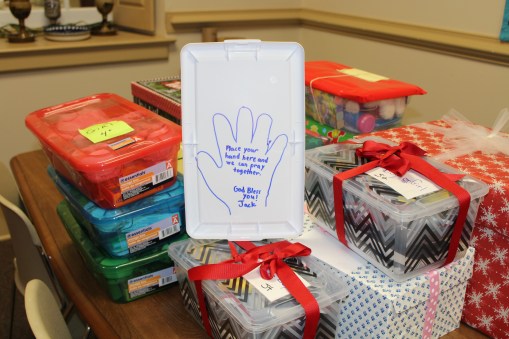
Jack, and his younger brother, Tyler, had something in their hands. As they got closer I could see they were holding the white plastic tops to one of those dollar store boxes. Before I could even venture a guess as to what this was all about, they showed me. On the inside of the white lid, in blue marker, was a tracing of their hand with the message, “Place your hand here and we can pray together. God bless you!”

The brothers told me how they put together several shoeboxes for our church’s Operation Christmas Child mission project, going to the store and filling the boxes with gifts for underprivileged children who might not ever feel the generous love of God. The brothers, though, took the shoebox project a step further by inviting the recipient of their box to join them in prayer.

I stood there amazed, dumbfounded and deeply moved. I’ve been talking a lot about the power of prayer and our need to pray more. I’ve said it once, twice, thrice, prayer is the foundation on which anything we do for God needs to be built upon. And now, the youngest among us not only heard, they took action, inviting another child’s hand to “touch” theirs in prayer.

Rendered speechless by the thoughtful act of two boys, I stared at the inside of the lid and slowly placed my hand on top of the one drawn in blue marker.

My wondering as to where the Spirit of God was moving among us was right there in front of me. I had received my holy high five.

ShoeBoxes


Prayer Pumpkins

I wonder how old the little boy is now? Let’s see. It’s been seven years since we started Pumpkinfest for God, which would mean…(counting the years on my fingers)…which would mean, yikes, it can’t be. He must be in high school now.

The years have gone by but much to my surprise and joy there in the yard of a once little boy was a huge selection of pumpkins, organized neatly by size, sitting in various corners of the yard. I have come to look forward to seeing this festive fall display on the winding country road that led one out of New York state and into Vermont and vice versa. The sight of all these homegrown pumpkins by one little boy was for me the official kick off to fall. I felt the same childlike excitement as I felt with Santa’s arrival at the end of the Macy’s Thanksgiving Day parade, which when I was a child ushered in the official start of Christmas. We all know nowadays Christmas comes way before the fall pumpkins. Don’t even get me going with whatever happened to Thanksgiving.

12063547_10153697251219650_3369192927364125500_n

Pumpkins shine forth an inspirational message on All Hallows Eve as a little rural church’s witnesses to the hundreds of trick or treaters.

Should I stop? I really don’t need any pumpkins for I was no longer the pastor of the little white church in which hosted Pumpkinfest for God.

Ah…Pumpkinfest for God. That was one of the many ideas that came to me on my habitual morning run on the treadmill at the gym. It was early on my ministry and the little rural village had the tradition of welcoming hundreds of trick-or-treaters. From the ghoulish to the cutest, children of all ages from surrounding villages came to Salem (not Massachusetts, but New York was the village I served in) for there was the guarantee of plenty of candy to be collected. The first year I was there we did what every other house or business did. We set up a table and made sure we had plenty of candy. The following year, though, I wanted to do more. I wanted our church to have more of a presence. I wanted us in some way to reach all these children—there were indeed hundreds—with some word of hope, some message of the good news, some non-threatening and definitely not in your face message that God is good all the time and Christ’s love is there for all.

There was a church down the block from us serving up hot dogs. That was their tradition. It was a good one for God does indeed feed not just the body but the soul as well. Then there was this trying-to-start-up-non-denominational church up the road who was against Halloween, but used this night in which hundreds of children descended upon the village to hand out religious tracts asking if they knew they were saved. With free hot dogs on one side of our church and religious tracts on the other, how could we be a light of Christ on All Hallows Eve?

Light. Pumpkins. Ever since I was a little girl I have adored jack o’lanterns. I looked forward to the day my parents took us kids pumpkin picking. And when Halloween drew near, we would line the kitchen table with newspaper and have a family pumpkin-carving party, which would end with a mess in the kitchen and all of us standing in the crisp night air admiring our lit creations.

What if we, the church, carved an inspirational message in the pumpkins, lined them up in front of our old historic building, right by the table in which we offered candy, and lit them up for all to see?

Pumpkinfest for God was born! The first year we posted the inspirational message on the bulletin board, one letter on one piece of construction paper, and asked folks to take one letter and carve it into a medium to large pumpkin and bring it back with a candle in it before dusk on the night of the festivities. Strong winds, however, blew that night and candles were being snuffed out. Fretting over this failure only lasted a second as a farmer quickly came to the rescue and showed up with a drill in one hand and white Christmas lights in the other.

Soon the Christmas lights were fed through the pumpkins and, thanks to a very long extension cord, the message illumined the darkening night.

The response was amazing as little children were drawn to the pumpkins. Those who couldn’t read would ask, “Mommy, what does that say?” Moms, who were surprised as to what they were seeing, leaned down to their child and told the good news, “Jesus lights the way.”

Soon Pumpkinfest for God became our church’s beloved tradition with every year a different message being lit up. One year, volunteers bought the pumpkins. Another year a local farm allowed us to glean the pumpkins from their fields. And yet another year, I stopped at this little boy’s home where the festive fall display had always caught my eye.

It was the year I challenged the church to stop thinking in terms of what can we get free from the community. Instead, to start thinking how the church can help local business owners who daily faced the heroic struggle of doing business in an area in which it seemed almost impossible.

So there I was ready to load up my car with 20 pumpkins and then some. Pumpkin by pumpkin I hoisted into the back of my Subaru, and as each was hoisted I lifted a prayer. I prayed for this little boy who grew these pumpkins year after year. I prayed for his family. I prayed for the youth group who was in charge of coming up with the inspirational message and the carving of the pumpkins that year. I prayed for the children who would be coming into our village. I prayed that in some way this message would indeed be the light for someone walking in darkness. I prayed for the little village I served asking God to bless it. Pumpkin by pumpkin a prayer was lifted.

I was ready to go. There was a problem though. No one was home and pumpkin purchases were made on the honor system. A little boy’s chicken scratched note read, “Leave the money in the metal box. Thank you.” The metal box had no lock on it, no slit in which to place the money securely into it. Nothing. I stood there with a crisp $100 bill, way more than what the total came to for the prices of these pumpkins were the best around. I hesitated leaving the money, but I couldn’t wait around. I looked at my watch and knew that soon the little boy would be home from school. So I took the chance. In went the $100 bill among the ones and fives and quarters that were already there. I smiled as I wondered what this little boy’s reaction would be when he saw that much money in his metal box.

It was then I prayed one more pumpkin prayer. It was a prayer of thanks that God had opened the hearts of our congregation to bless this little boy with such a generous gift of gratitude for the work he had done growing pumpkins. I thanked God for providing our church, which faced the same daily struggles as the businesses in the village faced, with means in which to do this wonderful act of generosity. I prayed a pumpkin prayer that day simply thanking God for the beauty of being connected to one another and the joy there is when we realize that connection and we help one another out.

One, two, three…yep, seven years have gone by since Pumpkinfest for God started. The little boy isn’t little anymore, but he is still growing the best pumpkins around. I looked at my watch. He is still in school. I slowed the car down. Should I stop?

I did. Pumpkin prayers were lifted once again. And a little boy who is not so little anymore had yet another surprise waiting for him in his now rusted metal box.

Farm is Now in Session

It was an idea discussed only in hushed whispers for many years. Students with farming backgrounds would come to the hallowed halls of seminary and make an important connection between farming and theology, and they would ask the question.

What if theological education could be combined with farming?

What if future pastors, many hailing from suburban and urban metropolises, actually had the opportunity to get their hands into the very dirt in which they talk about when the ashes are smudged onto one’s forehead and they say, “From dust you come, to dust you shall return.”

What if seminary could be a farminary? Farminary, an outdoor classroom where everything Jesus spoke of—the seeds, the weeds, the wheat, the grain that must die in order to produce life—became more than just words on a page, but became powerful, tactile lessons of God’s love for all of creation.

Students with farming in their blood would come to the hallowed halls of seminary—and they would go, leaving behind the ghosts of conversations hoping to be resurrected one day. The day of resurrection has come.

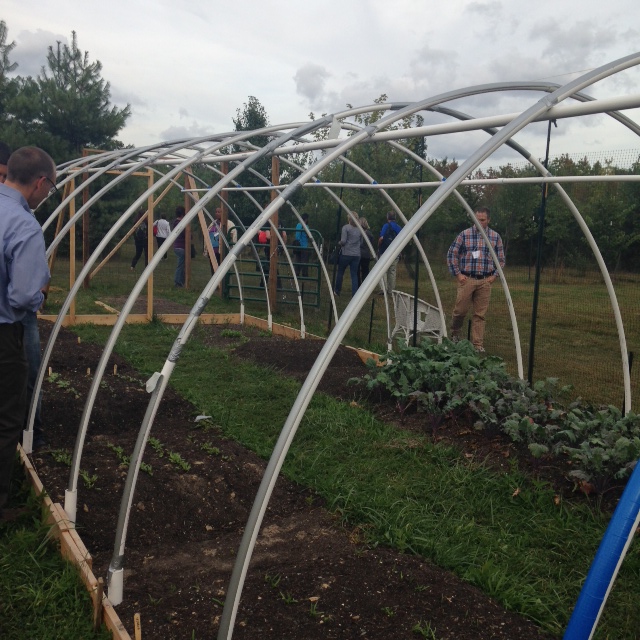
I stood on the soil of the soon-to-be-full-fledged hoop house on what it is now Princeton Theological’s Farminary, and smiled. For as I looked at the last of the peppers, the late in the season green beans and the strips of land being primed with compost in anticipation of the next growing season, it all made sense to me for it is in a garden, working the soil, planting a seed, dealing with grubs that stole my crops one year (a row of beets, broccoli and acorn squash), that I have felt so close to God. For the garden has been the place for me where life’s challenges, life’s failures, life’s defeats mingled with those seemingly fleeting moments of miracles, hope and, surprisingly at times, abundant blessings. It is in the garden where I have felt it the most. I have felt God’s hand on my shoulder. It is while tilling the soil and being part of God’s creation where I have learned to trust God’s provision—even when the harvest flops.

Now I am no farmer. I am a North Jersey girl who only knows how suburban sprawl grows. I have the reputation of being able to kill even the easiest plant to grow.

I am a North Jersey girl who shocked her colleagues when I said “yes” to serving a church in rural Upstate New York right on the border of Vermont all because I felt so strongly that there were lessons of life and faith waiting for me there. And there were many lessons of life and faith that I will forever treasure.

I am no farmer but I have attempted to “live off the land” but the soil on my Vermont homestead proved too rocky and too in need of the right nutrients that a novice like me had no idea how to remedy. My husband wasn’t surprise, and seemed almost relieved, when after two seasons of failed farming I announced, “I think I am just going to let the grass grow over that plot of land.” Of course, he cringed when I added, “Maybe you can break a new plot for me next spring over on the other side of our land?”

Friends who know me well look quizzically at me when I talk passionately about the lessons we can learn from farming and my desire to do so.

“Um, Donna, you know you can’t take your cute Kate Spade handbags out into the fields with you?” asked one friend who seemed as equally perplexed as she was concerned.

No, I am no farmer. I am the daughter of a woman who has harbored the same dreams of farming. And I am the daughter man who grew up on a farm in Switzerland. My dad, thought, left that life to become an engineer. Still I wonder if the Swiss farming DNA is in me, for I have always been a pioneer girl at heart, dreaming of having a farm, well, maybe not a full-blown farm, but at least having a successful kitchen garden complete with herbs both culinary and medicinal…someday…

farminary

The emerging hoop house where the first classes at Princeton’s Farminary were held this past spring.

For now, I am excited to see my alma mater has come on board with what those who have grown up on a farm know or those like me, who have served a farming community, know. There is much to learn about God while getting your hands dirty and while breaking your back tilling the ground. There is much to learn about God when witnessing firsthand the seasons of death and rebirth. There is a consoling hug to be felt when seeing your plants fall victim to an early frost. God knows and God cares. There is a gentle hand to wipe the tears of frustration when deer trample your corn. God knows and God cares. There is the resolve not to give up being strengthened when sharing these challenges and defeats in community with others. God knows and God cares.

What makes all of this so worthwhile? The feast that always comes—be it in times of plenty or times of want. For it is a feast of miracles and blessings from the soil to be shared with one another, brought forth and harvested through hard labor and trusting hearts. It is a feast spread before us that teaches us the most precious of all lessons. God cares for us deeply and so we, too, must care deeply and tend lovingly to the soil, to the seeds, to the worms, to the water, to one another.

School, um, I mean, farm is now in session at Princeton Theological Seminary. And for that I say, “Thanks be to God!”

Here’s more of the Farminary story!