Day 8—Who’s Lighting the Advent Wreath?

A Little White Church Advent

Come on an Advent journey and walk the rural roads and snow covered paths with Donna Frischknecht as she shares stories of God’s promises being fulfilled in the most amazing ways. These stories of “Emmanuel”—God with us—were gathered during her time serving as minister in a historic white clapboard church in upstate New York, right on the border of Vermont, from 2007-2013.
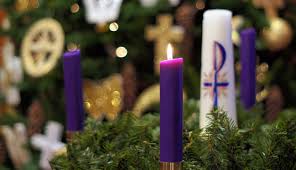
imagesDecember 8

Perhaps the lighting of the Advent wreath is a sensitive subject for me or maybe, just maybe, life’s circumstances have made me ultra aware of the “others” in our midst who we often overlook for one reason or another, especially in the season in which we prepare for Christ’s birth.

As a child sitting in the pew of the Congregational church my mom and dad took us kids to, I had to watch my church school nemesis be the star of the candle lighting liturgy every year, all the time wondering why I wasn’t up there doing it with my family? I never really did get an acceptable answer from my mom as to why and so I continued to wonder? Was it me? Was I not to be trusted with fire? Was it because my older brother had a disability and didn’t fit the picture of a family who should light the Advent wreath? Why weren’t we up there?

So when the time came for me as a pastor to help line up families to light the candles on the wreath I made sure I wasn’t going to fall into the trap many of our churches fall into. I wasn’t going to go for the ooh and ah factor of having the family with the cute little tots up there around the wreath. I wasn’t going to reinforce what the church thinks is hope in the future—young families with adorable token children in tow.

Christmas is a wonderful season for children. And, of course, it is a blessing to see families bringing up their children in the faith. But the message of Christmas is one that should remind us why God had to send His Son Jesus to us—because we are far from perfect.

We are broken. Families are fractured. Divisions are the norm and heartache seems to come more so than joy at times. Jesus had his own Christmas list of what to bless us with. That was to bring hope to the hopeless; to feed the hungry; clothe the naked; visit the lonely; comfort the grieving; welcome the stranger; etc.

So what better way to tell the beautiful story of Christmas than by inviting those who Jesus came to save and comfort to light the candles around the wreath?

And so as Advent approached I decided to present to the congregation what God’s picture perfect family of faith really looked like.

One year I asked those who are often forgotten at Christmastime to light the candles—men and women who were single and trying their best to smile even though the holidays accentuated the ache in their lonely hearts all the more.

I made sure the woman who was in her 40s and aching for a child of her own lit the candle of hope. I knew her struggle and so when the light of one flame shone on her face, I could swear it was God’s light kissing her tears away.

I made sure the one who was recently divorced had the chance to light the candle of peace, letting that promise of Advent enter into her heart and ease the discourse that had been in her life.

For the matriarch of the church whose feeble body made her feel as if she was no longer of use to anyone, she was the one who slowly walked up to light the candle of joy, a reminder to her and to all who watched that God was not yet done with any of us. And so the Advent line up of less than picture perfect families made their way to the Advent wreath each week to light the candles.

But perhaps the most powerful of all Advents was the year those who had recently lost loved ones were invited to the Advent wreath. Candle after candle was lit and the light of Christ’s Advent promises mingled with another promise—we are never alone. We have God and we have one another, a mish mosh of folks called together to be “family” to one another and who, in the sharing of our weaknesses, our struggles, our doubts and our insecurities, we find strength.

Who’s lighting the Advent wreath? The children of God who are telling the story beautifully as to why God sent his Son to us, that’s who.
 

Farm is Now in Session

It was an idea discussed only in hushed whispers for many years. Students with farming backgrounds would come to the hallowed halls of seminary and make an important connection between farming and theology, and they would ask the question.

What if theological education could be combined with farming?

What if future pastors, many hailing from suburban and urban metropolises, actually had the opportunity to get their hands into the very dirt in which they talk about when the ashes are smudged onto one’s forehead and they say, “From dust you come, to dust you shall return.”

What if seminary could be a farminary? Farminary, an outdoor classroom where everything Jesus spoke of—the seeds, the weeds, the wheat, the grain that must die in order to produce life—became more than just words on a page, but became powerful, tactile lessons of God’s love for all of creation.

Students with farming in their blood would come to the hallowed halls of seminary—and they would go, leaving behind the ghosts of conversations hoping to be resurrected one day. The day of resurrection has come.

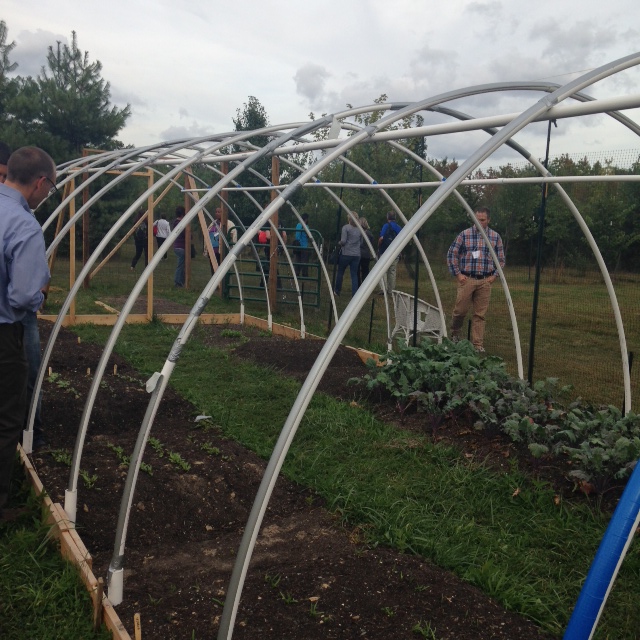
I stood on the soil of the soon-to-be-full-fledged hoop house on what it is now Princeton Theological’s Farminary, and smiled. For as I looked at the last of the peppers, the late in the season green beans and the strips of land being primed with compost in anticipation of the next growing season, it all made sense to me for it is in a garden, working the soil, planting a seed, dealing with grubs that stole my crops one year (a row of beets, broccoli and acorn squash), that I have felt so close to God. For the garden has been the place for me where life’s challenges, life’s failures, life’s defeats mingled with those seemingly fleeting moments of miracles, hope and, surprisingly at times, abundant blessings. It is in the garden where I have felt it the most. I have felt God’s hand on my shoulder. It is while tilling the soil and being part of God’s creation where I have learned to trust God’s provision—even when the harvest flops.

Now I am no farmer. I am a North Jersey girl who only knows how suburban sprawl grows. I have the reputation of being able to kill even the easiest plant to grow.

I am a North Jersey girl who shocked her colleagues when I said “yes” to serving a church in rural Upstate New York right on the border of Vermont all because I felt so strongly that there were lessons of life and faith waiting for me there. And there were many lessons of life and faith that I will forever treasure.

I am no farmer but I have attempted to “live off the land” but the soil on my Vermont homestead proved too rocky and too in need of the right nutrients that a novice like me had no idea how to remedy. My husband wasn’t surprise, and seemed almost relieved, when after two seasons of failed farming I announced, “I think I am just going to let the grass grow over that plot of land.” Of course, he cringed when I added, “Maybe you can break a new plot for me next spring over on the other side of our land?”

Friends who know me well look quizzically at me when I talk passionately about the lessons we can learn from farming and my desire to do so.

“Um, Donna, you know you can’t take your cute Kate Spade handbags out into the fields with you?” asked one friend who seemed as equally perplexed as she was concerned.

No, I am no farmer. I am the daughter of a woman who has harbored the same dreams of farming. And I am the daughter man who grew up on a farm in Switzerland. My dad, thought, left that life to become an engineer. Still I wonder if the Swiss farming DNA is in me, for I have always been a pioneer girl at heart, dreaming of having a farm, well, maybe not a full-blown farm, but at least having a successful kitchen garden complete with herbs both culinary and medicinal…someday…

farminary

The emerging hoop house where the first classes at Princeton’s Farminary were held this past spring.

For now, I am excited to see my alma mater has come on board with what those who have grown up on a farm know or those like me, who have served a farming community, know. There is much to learn about God while getting your hands dirty and while breaking your back tilling the ground. There is much to learn about God when witnessing firsthand the seasons of death and rebirth. There is a consoling hug to be felt when seeing your plants fall victim to an early frost. God knows and God cares. There is a gentle hand to wipe the tears of frustration when deer trample your corn. God knows and God cares. There is the resolve not to give up being strengthened when sharing these challenges and defeats in community with others. God knows and God cares.

What makes all of this so worthwhile? The feast that always comes—be it in times of plenty or times of want. For it is a feast of miracles and blessings from the soil to be shared with one another, brought forth and harvested through hard labor and trusting hearts. It is a feast spread before us that teaches us the most precious of all lessons. God cares for us deeply and so we, too, must care deeply and tend lovingly to the soil, to the seeds, to the worms, to the water, to one another.

School, um, I mean, farm is now in session at Princeton Theological Seminary. And for that I say, “Thanks be to God!”

Here’s more of the Farminary story!